

ARCHDIOCESE OF IBADAN HOSTS 2026 NADRE CONFERENCE
Jacob BABALOLA (Staff Writer)
The National Association of Directors of Religious Education (NADRE) was in Ibadan, Oyo State from 20th – 23rd January, 2026 for its 2026 NADRE Conference with the theme: “You Shall Have No Other Gods But Me” (cf Exodus 20:3) Towards a Proper Catechesis Against New Attraction to Paganism.
The Conference was declared open by the Metropolitan Archbishop of Ibadan, Most Rev. Gabriel ‘Leke Abegunrin, who was represented by the Archdiocesan Chancellor, Very Rev. Fr. Anthony Omolade during the opening Mass at the Church of the Ascension, Bodija, Ibadan, on Wednesday, 1st January 2026.
The Director of Religious Education in the Archdiocese of Ibadan, Rev. Fr. Clement Emerue welcomed the Archbishop, Director of Pastoral Affairs from the Catholic Secretariat of Nigeria, Priests, Directors of Religious Education across the country (comprising Priests and Rev. Srs), the Laity President, AICWO President and Vice President, Catholic Nurses Guide, Catechists in the Archdiocese, brothers and sisters in attendance.
The Homilist at the Mass was the National Chaplain of Catechists in Nigeria (NACCAN), Very Rev. Fr. Solomon A. Olumekhor; who welcomed all and enjoined the participants to ensure right doctrine of the Church prevails by standing their ground even in the face of intimidation, like St. Agnes, whose memorial was celebrated on the same day.
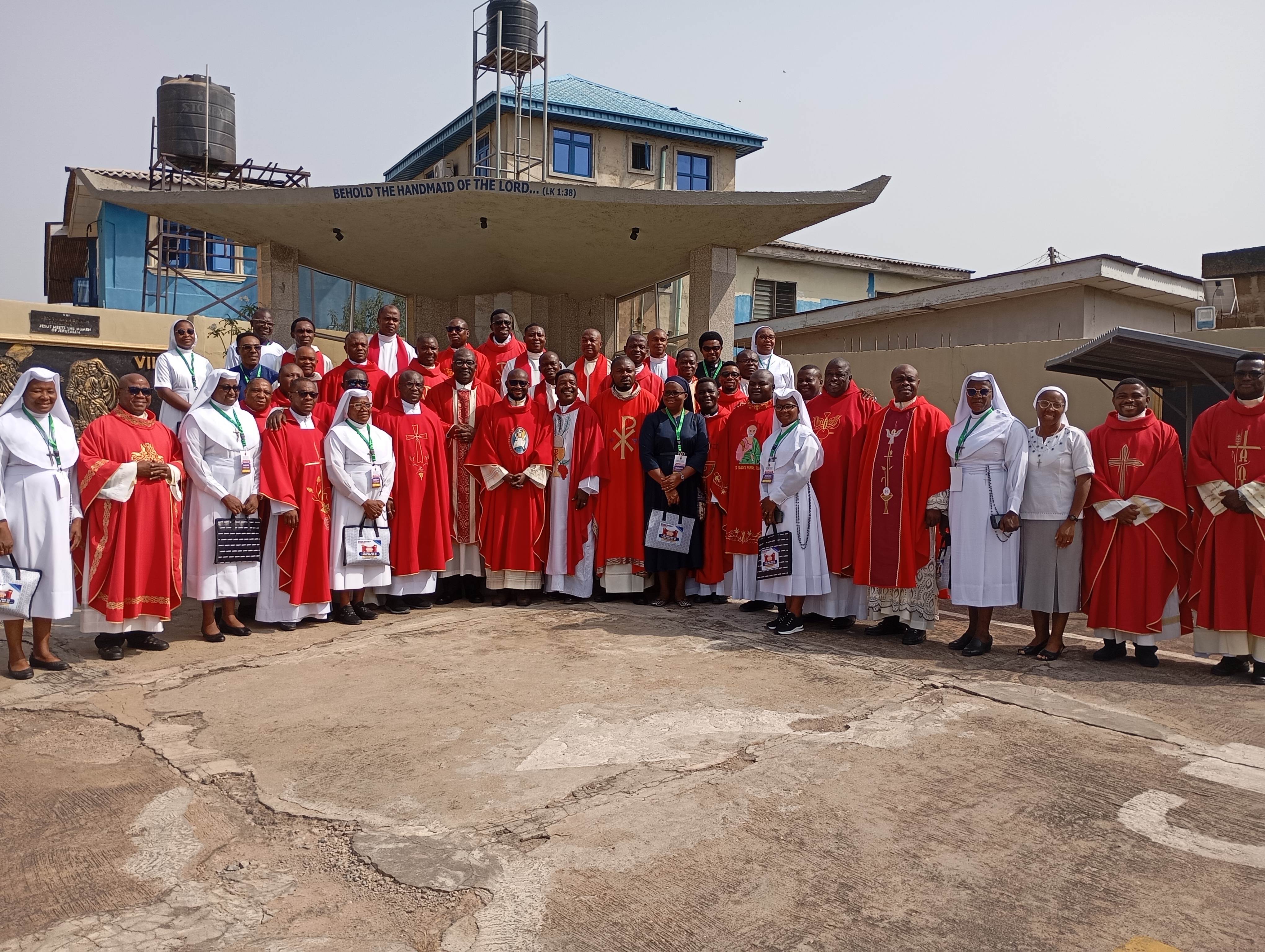
The President of the Association, Very Rev. Fr. Albert Ebosele; the General Secretary, Rev. Fr. Joseph Olaolu Ogunnupebi and the Archbishop’s representative, Fr. Anthony Omolade addressed the gathering during the opening Mass before declaring the Conference open. After the final blessing, the participants snapped group photographs in front of the Grotto.
The second section shifted to the Parish’s Hall where NADRE Vice President, Rev. Fr. Emmanuel Ejike Umeh delivered a welcome address, highlighting the essence of the NADRE’s gathering.
Keynote address was also given by Very Rev. Fr. (Dr.) Francis Adedara in which he pointed out that the Conference theme: “You shall have no other gods but me” was a direct command from God and not just as suggestion but as a core mission. He described every rejection of God as paganism, adding that it is a great scandal if Christ remains unknown in any part of the world and so charged NADRE to consider reasons for such rejection of Christ and proffer suggestions.
Analyzing what authentic Catechesis is, the Speaker described it as a vital component of the Catholic Church as it helps to foster deep adherence, helps make people believe in God, offers good understanding of the faith and teaches meditation of God’s word.
On paganism, he described it simply as non-Christian religions which are brought about by different factors. He explained that there are ordinary and extraordinary members of the Church, yet all are still members of the Church and that because all belong to God, God cannot be unknown, hence, there is no reason for paganism in the society.
Fr. Adedara went further to classify members of the Church into those that marginalize God by the virtue of advanced technology; those that malign God as a result of superstition but pointed out that there is nothing wrong with religion, rather, there is bad practice of religion. He stated that Catholic Church has social teaching to prevent paganism, even though all agreed that God is the only one that can convert, man is only an instrument or agent. He wished the NADRE a successful deliberation.
The lead paper at the Conference was delivered by Rev. Sr. Florence Oso. She explained that in the past those outside Rome were classified as pagans before the advent of religion but later those not practicing a religion (worldwide known) are referred to as pagans; hence, paganism is opposing to the worship of true God.
The speaker further said that the situation has given room to what is now refers to as ‘New paganism’ as a result of people leaving their religions back to paganism and that this new paganism is selling well among the youth and has become of great concern to the Church.
Sr. Oso highlighted some of the reasons why people are attracted to the new paganism. These include unhealthy quest for power/money, means of escape from unfavourable situation in the country, bad encounter/experience from religion, and impatience of many; the result of which is not always palatable.
Some implications of the new paganism, according to the speaker are: it spreads so much among the youth through the use of social media; youth no longer pay attention to the established norms, it threatens the faith of the weak ones and threatens active participation by the lay faithful. She therefore urged the parents and guardians to pay attention to the youth and friends they move with because it is such youth that leave the Church that often turn back to persecute the Church and draw more youth to other religions.
Rev. Sr. Oso admonished that the Church ensures that anyone leaving the Church should not go with bitterness, shift emphasis from spiritual to physical development of members, pays attention to the spiritual needs of people rather than physical structures in the Church, provides something else to the youth to attract them from paganism, pays attention to the content of the catechesis, sensitizes the youth about what paganism is (for they may not really know or understand when crossing boundary from religion to paganism), sustains the faith of members, inspires strong religion commitment, proffers holistic approach to the service of God’s people, thorough understanding of indigenous practices, in-depth catechesis at the initial stage, never be tired, gives sufficient time for the preparation of converts for the Sacrament of Christian Initiation, includes echo-theology in catechesis, overhauls content and method of catechesis, go back to the family to correct and train the children to have personal faith in God.
Both lectures were followed by questions and answers sessions and contributions. Vote of thanks was done by the NADRE Vice President, Fr. Umeh to bring the day’s activities to a close while participants prepared for the Conference proper.
Share:


2 Comments

Vertyowdiwjodko kofkosfjwgojfsjf oijwfwsfjowehgewjiofwj jewfkwkfdoeguhrfkadwknfew ijedkaoaswnfeugjfkadcajsfn catholic-weekly-independent.com
Williamdoulk
Feb 17, 2026December 4, 2017 at 03:37
wjtngyuwnmgypolwretldiljmhttrf
tmzqiiqwfq
Feb 14, 2026December 4, 2017 at 04:44