

The Good Shepherd
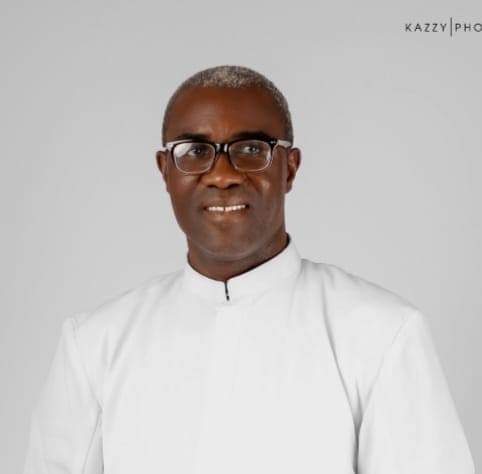
Fr. Richard OMOLADE
Psalm 23 has ingrained in us the image of the Good Shepherd in that beautiful poem “The Lord is my Shepherd.” And with the ubiquitous activities of the cow herders, we can indeed make a good comparison between the picture painted for us in the Bible and what we see around us. Truth be told, they are worlds apart. The Lord Himself is the Good Shepherd who cares for His sheep. He knows them, calls each by name, and they in turn recognize His voice and heed His call such that there is no room for confusion and going astray. This is precisely what priests are called to manifest in the world today, yet many are grossly deficient in this expectation and requirement.
The flock will always need good shepherds because the world around us is a dangerous one filled with wolves and other beasts that prey on the innocent sheep. In many Churches today, members are also preyed upon easily because they trust the wrong pastor, no wonder when the people asked for a king in the Old Testament, God was not pleased with them because He is their God, and they should not have sought other king to guide them and protect them. Yes, sometimes they acknowledge this as when we read “We, your people and flock of your pasture” There is thus a special closeness, a bond between the flock and the shepherd. This closeness is further emphasized in the New Testament when Christ describes Himself as the Good Shepherd who lays down his life for His sheep. This loving gesture helps us to understand why priests are called pastor. The flock has been entrusted to them.
In fact, the flock depends on the pastor for life and sustenance. If the shepherd is not attentive, the wolves, real wolves can prey on the flock and in our day, also wolves in sheep clothing can also sneak in to kill and devour. No wonder, discernment of vocation is necessary so that we can choose men after the heart of God who will be true shepherds of God’s people. Those in position of authority must therefore be men of wisdom so that they can act tactfully in choosing right candidates for the service of God’s people. Shepherds must be vigilant since only in this wise will they be able to detect possible attacks and protect the sheep of the fold.
The Late Pontiff, Pope Francis, also reminded us that Pastors must have the smell of the sheep, which is a way of saying that pastors or shepherds must be so closely connected to their sheep that they live the same kind of life. This is becoming problematic today as many pastors have assumed celebrity status and desire and actually live above the people. With the socio-economic situation of Nigeria today, pastors living above their people and showing no concern for the flock is a betrayal of the Gospel value and a disservice to the mission entrusted to pastors.
As the Bible reminds us since shepherds continue to feed themselves rather than the flock, God declared that He would take the flock from the shepherd and He Himself would shepherd His people. This is the mark of the Good Shepherd, who expend himself for the good of the flock.
As our society is filled with lost sheep, we need Good Shepherds with compassionate heart and tolerance for sacrifice, shepherds who will go after the lost sheep in order to bring them back home. The mere presence of the shepherd to the lost sheep is consoling and reassuring at the same time. “Once, I was lost, but now, I am found”. What joy floods the heart to realize one is no longer alone and lost in the world of hate and sin. It is this presence that we need in the world today, we need shepherds to be close to the people. Learning to stay close to our sheep does not come easy. One must be patient, tolerant, loving, and sacrificial. “I am the Good Shepherd and I lay down my life for my sheep.” What a profound message from Jesus! It is this habit that pastors are called to replicate all over God’s kingdom on earth, to make it truly an abode of peace and comfort.
Helping to discern, select and train candidates to be good shepherds is not just the work of seminary formators, all Christ’s faithful must be involved. This is best done by people who pay for training, by those who give crucial advice when a vocation would have been lost. It is also made manifest by the system of accompaniment we put in place so that candidates do not feel overwhelmed and abandoned to their fate. The power of prayer generated by Vocation Teams and prayer groups also play vital roles in the making of Good Shepherds. So, as we celebrate the Good Shepherd Sunday, let us be reminded that we get what we sow! God will give us Good Shepherds if we create the enabling environment for spiritual discernment, loving response to God and the support necessary for faithful service to God and His people. Ultimately, Christ is the Good Shepherd and our priests must be formed in His image and likeness, otherwise, they cannot be called Good Shepherds.


Leave a Comment