

Vance and Leo
Thought for the Week, April 26, 2026
In the context of President Donald Trump’s war against Iran, when Pope Leo XIV intervened in favour of dialogue and peace instead of war, some commentators thought it was clear to them that his intervention meant he, a religious leader, had dabbled into “politics”. For such commentators, the Pope broke a taboo. For them, religious leaders should stay out of politics and stick to their religious beliefs, prayers and rituals. Their voices should remain silent on matters of politics, wars and foreign policy. One of such commentators is America’s Vice President J. D. Vance.
In a Fox News interview, Vance, a recent convert to Catholicism, literally attempted to teach the Pope how to theologize when he said: “It would be best for the Vatican to stick to matters of morality, to stick to matters of what’s going on in the Catholic Church and let the President of the United States stick to dictating American public policy.”
Vance admonished the Pope to be careful not to mix global affairs and complex theology. It was his way of saying religion and politics are parallel lines that cannot meet, a way of saying religious leaders should stay out of “politics”.
At a time when a war is being waged that has led to the death of young and innocent school children, at a time a war is being waged whose consequences have led to further impoverishment of millions around the world, consequences the world will have to live with for some years to come, religious leaders are asked to refrain from speaking on the immorality of the war. It is a call to worship a God who has nothing to say when innocent lives are being sacrificed on the altar of egotism and hegemony.
Long before Vance, American political theorist John Rawls had argued that in order to arrive at a theory of justice that would command consensus in a society of diversity, those in search of such a theory should be covered by a veil of ignorance. Under this veil, diversity of religious, ethnic or cultural affiliation would not be brought into the discussion.
In a multi-religious entity such as the United States of America and our own Nigeria, it is not unusual to hear of or meet people who express the desire to separate religion and politics. Such people might argue on the premise that, because religion is a “divisive factor”, it should be left out of politics. But the argument is not unassailable.
Diversity is not a source of division until it is weaponized and instrumentalized by demagogues, power addicts and influence peddlers. The mere fact of diversity of religious affiliations is not a divisive factor. Religion is turned into source and instrument of division when it is deployed by persons who would use it to shore up their electoral fortunes, as it happens every election season. Diversity of religious affiliations is one thing, manipulation of religious diversity for self-centred political ends is another thing. Diversity of religious affiliations shows we are different in our world-views. But we may be different without being divided. That is why difference in itself, in this instance religious difference, is not necessarily a divisive factor.
If difference is not division, we may be different and still live in peace and harmony. We can live in peace and harmony, despite our divergent creedal subscriptions, when we collectively resolve to refrain from mismanaging our differences. For, despite our religious differences, we have a common humanity. And when we recognize our common humanity, we recognize that we still have the shared core value of civility.
If, on the grounds of perceived divisiveness of religion, we were to exclude religion from politics, as some would advocate, we would be logically bound to also exclude ethnic and indeed every other affiliation from politics. But we cannot deny our ethnic affiliations. If we were to do so we would be denying ourselves. We would be denying our identities. Our religious, ethnic and cultural beliefs make up our horizon. Our search for what is true and what is right is never undertaken outside our horizon. A veil of ignorance, as advocated by Rawls, would amount to a veil of pretence or a veil of denial. But we cannot pretend not to be what or who we are. We cannot deny our identity. What is to be deplored is cynical deployment of identity in the quest to dominate. The same applies to diverse political affiliation. We are not going to exclude political parties from politics even when it is clear that they are often weaponized for division.
When it is argued that the Church or the Pope should stay out of “politics”, as Vice President Vance did, one would need to interrogate the speaker’s notion of politics. Politics, rightly understood as an ethical project, that is, as intelligent regulation of common life for the attainment of common good, is a virtue and a moral obligation. The Church must not stay out of such a project.
Politics, dangerously conceived as pursuit of power through any means, is immoral. In fact, such pursuit is not politics but, properly speaking, brigandage. The Church must not be involved in that. She must, as a matter of faith and reason, and for the sake of our common humanity, denounce such misconception and practice of “politics” even if merchants of war and artisans of hatred hate her and calumnise her.
What is needed, therefore, is not divorce of religion and politics, but right understanding of the role of religion in the public square. We may pretend that we have kept religion out of politics when, in fact, politics without ethics has been turned into a religion by those who advocate the exclusion of religion from the public square. Politics as an ethical project has the common good as intent, and common good is a category in ethics. Some people would want their ethics to be grounded on reason alone. But there are also people whose ethics is grounded on reason and faith, and who, for that reason, would not subscribe to the exclusion of religion from political behaviour. Ethics may be guided by reason and by religion. But that would not justify the pastoral malpractice of using one’s office as religious leader to campaign for any candidate in an election, as some preachers would do.
Instead of pretentious exclusion of diversity, what is needed is promotion of ordered diversity where citizens of divergent political, religious and ethnic affiliations collaborate in the implementation of a common project of respect for our common humanity. Implementing such a project, no one would issue any arrogant, dangerous and genocidal threat to wipe out an entire civilization.
Here on the home front, in Nigeria, we have this lesson to learn: there is an urgent need for a constitution that manages our diversity, a constitution that goes beyond the provision of manipulable federal character principle. Nigeria needs a constitutional order that uncompromisingly imposes stiff sanctions on any act that manipulates our diversity for self-centred political objectives.
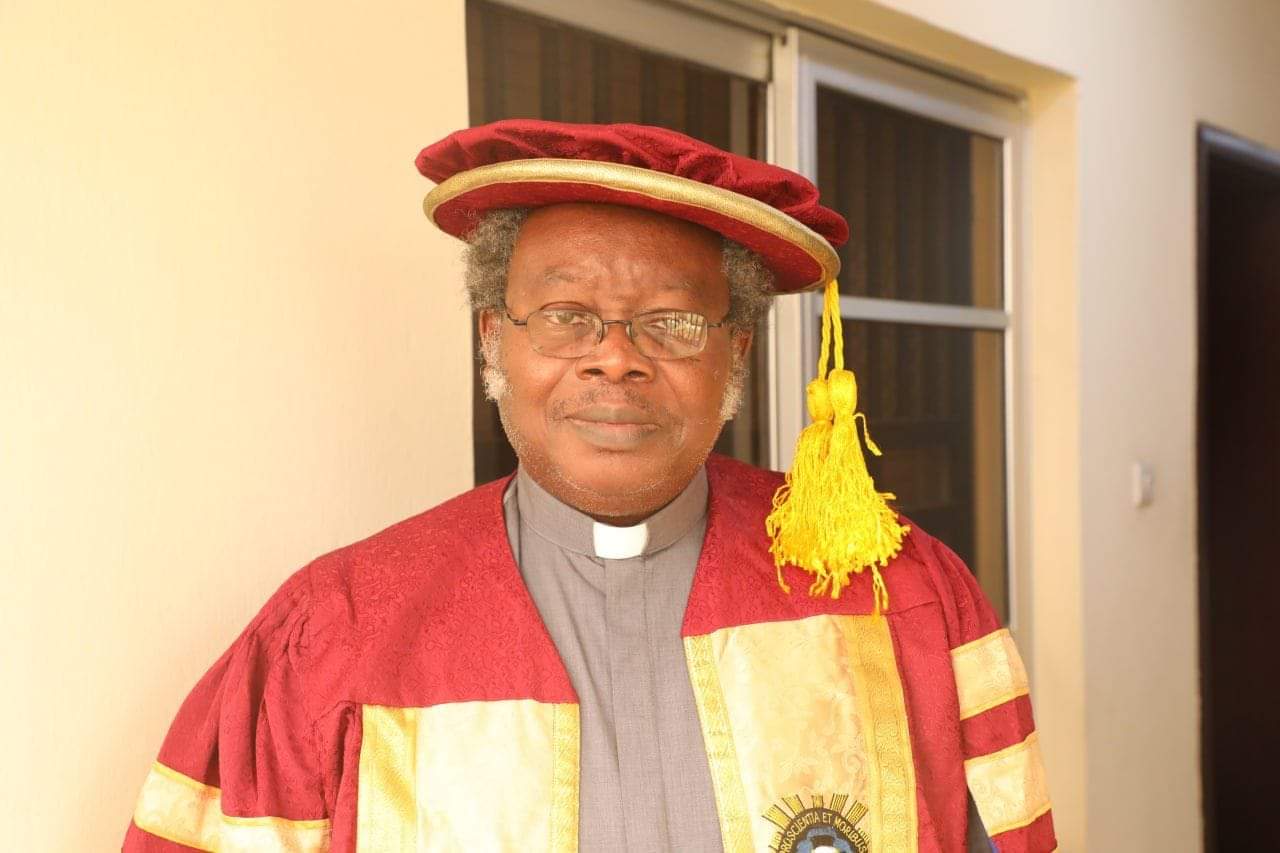
Father Anthony Akinwale, OP


Leave a Comment