

Ibadan Archdiocese Holds Presbyterial Pastoral Seminar
Fr. Peace JEMIBOR
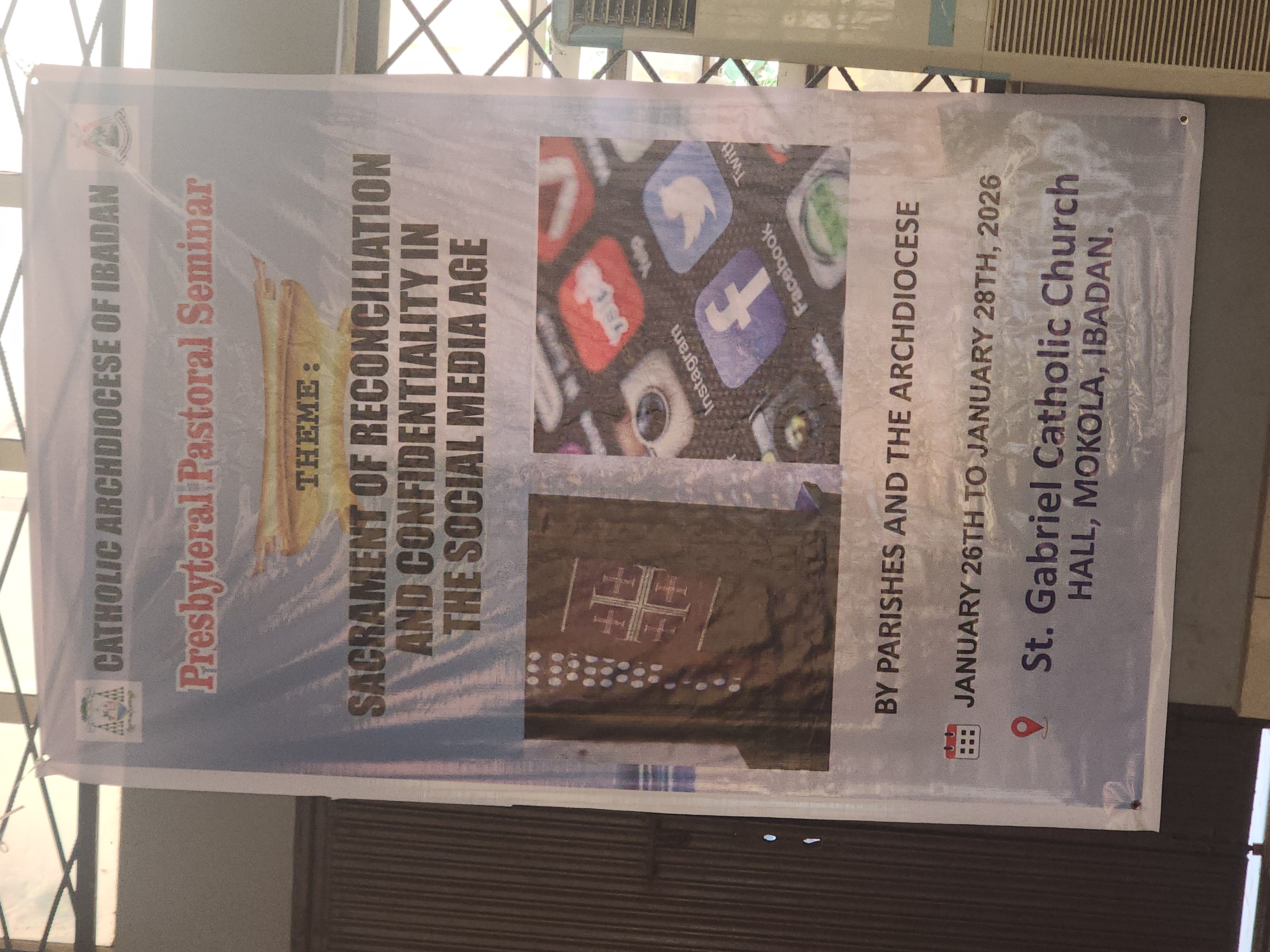
The Catholic Archdiocese of Ibadan has concluded its 2026 Presbyterial Pastoral Seminar, a three-day programme that focused on the theme “Sacrament of Reconciliation and Confidentiality in the Social Media Age.” The seminar held from Monday, January 26 to Wednesday, January 28, 2026, at St. Gabriel Catholic Church, Mokola, Ibadan, and brought together priests from across the Archdiocese for reflection, pastoral evaluation, and strategic planning.
The seminar, which formed the first segment of the programme, was anchored by a thought-provoking presentation delivered by Rev. Fr. Lawrence Olumide Ogundipe, SDV. In his address, Fr. Ogundipe challenged priests to reflect deeply on their sacred responsibility in a digital culture that often prioritizes exposure over discretion. He reminded participants that while the modern world celebrates visibility, the Gospel consistently calls for fidelity, reverence, and restraint.
According to him, the Sacrament of Reconciliation stands as one of the most sacred encounters between God and humanity, demanding absolute confidentiality and moral integrity from the minister. He cautioned against the subtle dangers posed by social media, digital communication, and technology when not properly guided by pastoral prudence. Priests, he said, must learn to engage modern tools wisely without allowing them to erode or desecrate what is holy. His presentation generated deep reflection and interactive discussions among participants.
A major highlight of the seminar was the presentation of the 2026 Pastoral Guidelines by the Archbishop of Ibadan, most Rev. Dr. Gabriel ‘Leke Abegunrin. The guidelines outlined the Archdiocese’s pastoral priorities for the year and addressed key areas such as the promotion of priestly and religious vocations, the renewed emphasis on the proper use and reverent enthronement of the Book of the Gospels in parish liturgies, and the clarification of ecclesiastical procedures for reporting and handling various pastoral and administrative issues.
The Archbishop also drew attention to the importance of promoting culture within the life of the Church, encouraging parishes to appreciate and integrate authentic local cultural expressions that are in harmony with Christian values. In addition, the guidelines addressed emerging realities affecting the Church’s administration, including new national tax laws and their implications for Church institutions.
Complementing this was a dedicated briefing on the ongoing tax reforms in the country. Participants were enlightened on compliance requirements, accountability expectations, and the need for transparency in Church administration in line with civil regulations, while safeguarding the Church’s mission and identity.
The second and arguably most extensive segment of the three-day seminar consisted of reports from all parishes within the Archdiocese. Parish priests presented detailed accounts of pastoral activities, challenges, growth areas, and innovations within their respective communities. These reports provided a realistic picture of the state of the Archdiocese at the grassroots level. Following the presentations, interventions and constructive observations were made by the Archbishop and other members of presbytery, aimed at strengthening pastoral effectiveness, improving administration, and fostering sustainable growth across parishes. The interactive nature of this segment allowed for shared learning, mutual encouragement, and the identification of best practices that could be adopted more widely within the Archdiocese.
By and large, the 2026 Presbyterial Pastoral Seminar was described by participants as enriching, timely, and forward-looking. It reinforced the call for priests to remain faithful stewards of the mysteries entrusted to them, attentive to the signs of the times, and committed to pastoral excellence in a rapidly changing world.


Leave a Comment