

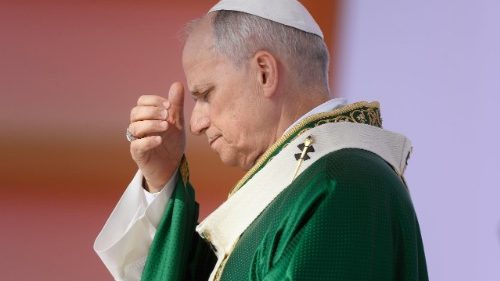
Pope Leo’s Message on Lent
In anticipation of Lent, in the last three weeks, we have discussed one of the three pillars of Lent, which is prayer. In the next couple of weeks, we shall examine the other two: fasting and charity/almsgiving.
However, as part of Pope Leo’s Lenten message, he tells us the importance of Listening, Fasting and Togetherness. Genuine readiness to listen is one of the clearest ways we show that we are open to forming meaningful relationships. When God revealed himself to Moses in the burning bush, he made it clear that listening is part of his very nature: “I have observed the misery of my people who are in Egypt; I have heard their cry” (Ex 3:7). God’s attention to the suffering of his people marks the beginning of their liberation, as he calls Moses and sends him to lead those held in bondage toward freedom.
God continually seeks to draw us into participation with him and still shares what is in His heart with us today. Because of this, attentively receiving the word during the liturgy trains us to perceive truth more deeply in the realities around us. Surrounded by many competing voices in daily life and society, Sacred Scripture guides us in recognizing and responding to the distress of those who are burdened and in pain. To develop this inner capacity to listen, we must let God shape us so that we may learn to listen as he does. We must also remain mindful that “the condition of the poor is a cry that, throughout human history, constantly challenges our lives, societies, political and economic systems, and, not least, the Church.”
In Pope Leo’s thought on fasting, he states that if Lent calls us to listen more attentively, fasting becomes a practical way of preparing our hearts to receive God’s word. Going without food is an ancient spiritual discipline closely tied to the journey of conversion. Because it engages the body, fasting helps us become more aware of what we truly long for and what we consider essential. It also helps us to recognise and properly direct our desires, keeping alive our thirst for justice and freeing us from indifference. In this way, fasting encourages both prayer and responsible action toward others.
With deep spiritual insight, Saint Augustine reflects on the tension between life as it is now and the future fulfilment that lies ahead. He writes: “In the course of earthly life, it is incumbent upon men and women to hunger and thirst for justice, but to be satisfied belongs to the next life. Angels are satisfied with this bread, this food. The human race, on the other hand, hungers for it; we are all drawn to it in our desire. This reaching out in desire expands the soul and increases its capacity.” Seen in this light, fasting not only helps us discipline and purify our desires, but also stretches them, directing them more fully toward God and toward doing good.
We shall continue from here next week…


Leave a Comment