

Beyond the surface: St Francis and the Leper, and the True Meaning of Conversion of Heart
JUBILEE YEAR OF ST. FRANCIS OF ASSISI
Friar Johnpaul ONYIA, OFM Cap.
As we commemorate the 800th anniversary of the Transitus (heavenly passing) of Saint Francis of Assisi, we are invited to reflect on one of the defining moments of his spiritual transformation: his encounter with a leper. Francis’ path to holiness was shaped not only by prayer and contemplation but also by a profound encounter with human suffering and exclusion. This event reveals an essential aspect of Christian conversion (metanoia): learning to see beyond appearances and recognizing the God-given dignity of every person.
In the medieval world, lepers were feared, rejected, and treated as social outcasts. Banished from society, they lived on the margins of the human community. Francis, born into a wealthy merchant family and driven by dreams of honour, prestige, and knighthood, shared the common fear and disgust towards lepers. Yet it was through confronting what he most dreaded that he experienced a radical change of heart. His encounter with the leper became a turning point, teaching him- and teaching us- that authentic conversion begins when we learn to see others through the compassionate eyes of Christ.
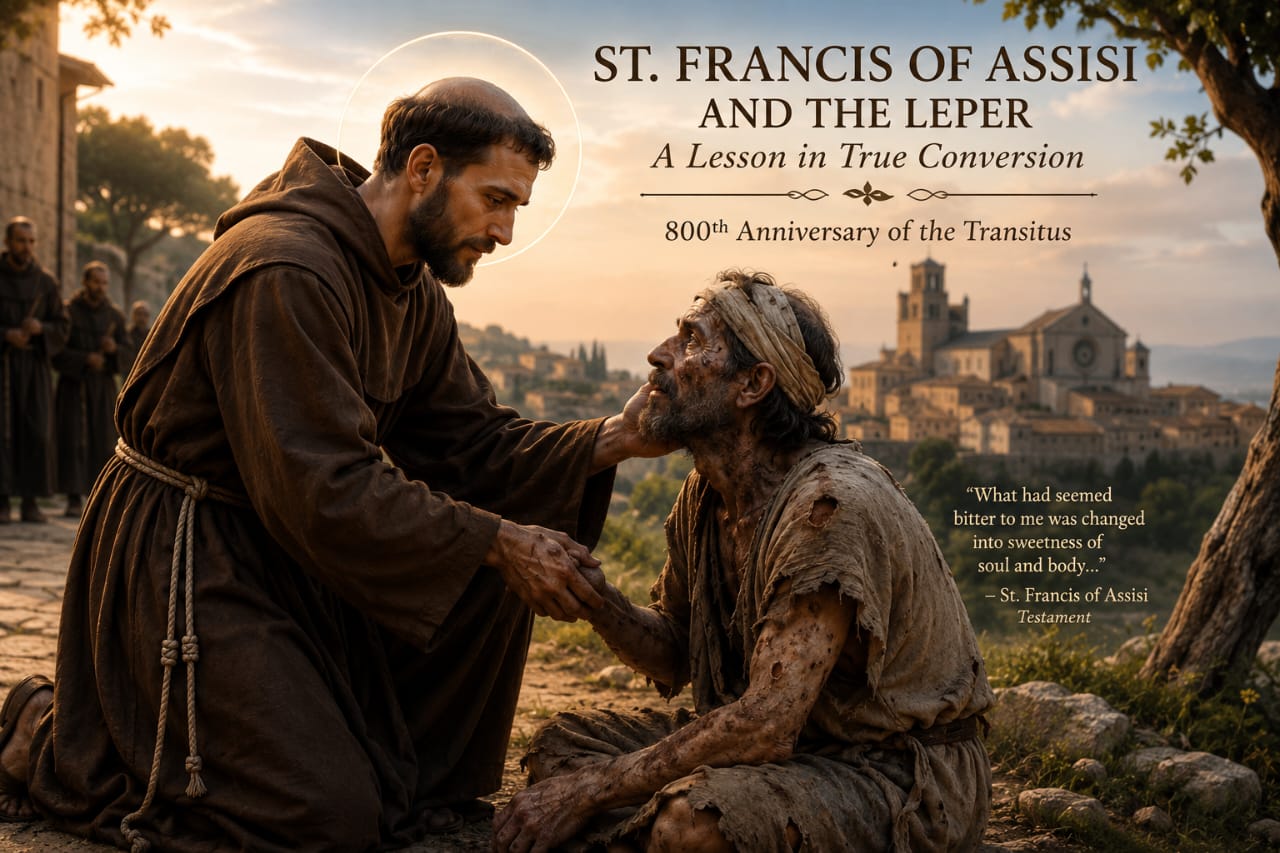
On one occasion, Francis, the wealthy young merchant accustomed to a comfortable lifestyle, came face to face with a leper. While riding on horseback, he was suddenly confronted by a man bearing the visible signs of advanced leprosy. Francis’ immediate instinct was to turn away and flee. However, moved by a profound grace, he resisted his fear. Dismounting from his horse, Francis approached the man. Instead of throwing a coin from a safe distance, he placed the money directly into the leper’s deformed hand, bent down, and kissed him. Reflecting on this experience years later in his Testament, Francis wrote: “In this way did the Lord give me, Brother Francis, to begin to do penance: when I was in sin, it seemed too bitter for me to see lepers. And the Lord Himself led me among them, and I showed mercy to them. And when I left them, what had seemed bitter to me was changed into sweetness of soul and body...”
This extraordinary encounter with a leper marked the beginning of Francis’ profound religious and spiritual transformation. It remained a lasting memory and became a turning point in his journey towards conversion. Thus, his conversion did not lead him to enter a monastery or another existing form of religious life within the Church. Rather, in his earlier rule, he wrote that the friars must rejoice when they live among people of little worth who are looked down upon, among the poor and the powerless, the sick and the lepers, and the beggars by the roadside.
Thus, this encounter offers a profound and insightful theological lesson on the nature of metanoia, as it touches on human pain and suffering. Firstly, conversion requires a change of vision. Francis did not simply perform an act of charity; by giving money to the leper, he learned to see the suffering leper through the eyes of Christ. His example challenges us to ask ourselves: with what attitude do we relate to the poor, the marginalised, the sick, the elderly and the underprivileged? Secondly, conversion is a victory over self-love. Francis had to overcome his own physical aversion and barriers before he could receive God’s peace. Conversion requires us to confront our own "lepers," those people, situations, or Gospel demands that we naturally find uncomfortable or difficult to embrace.
Therefore, for genuine conversion to take place in our encounter with others, we must first conquer and destroy all forms of prejudice, ethnic bias, social discrimination, and cultural barriers. Only then can we truly see the person before us as someone created in the image and likeness of God.
Lastly, conversion is Christocentric. In kissing the leper, Francis followed the footsteps of Christ in his relationship with the poor and the suffering (Matthew 25:40). Francis did not find his deepest conversion in the quiet of a chapel alone, but in the embrace of a marginalized person (a leper). In our encounter with the poor and marginalized, do we draw closer to them, and do we recognize their human dignity?
As we celebrate the legacy of St. Francis of Assisi, his encounter with the leper challenges us to examine our own lives. In our daily lives, who are the "lepers" we are tempted to avoid? Following St. Francis’s example means moving beyond what might be called: “distant charity." Living the Franciscan spirit in our local parishes requires more than occasional acts of charity. It demands a willingness to "dismount our horses," to step out of our comfort zones, social status, and prejudices, and truly meet those in need. It is easy to give alms out of a sense of duty while keeping our hearts detached; it is far more difficult to offer genuine presence, friendship, and solidarity. Francis’ conversion invites us to personal proximity, to listen, to show respect, and to recognize the inherent dignity of every human being we meet. Within our parishes, this conversion can manifest in active support for the Society of St. Vincent de Paul, pastoral care for the sick, and a welcoming attitude towards those who feel alienated from the Church.


Leave a Comment