

ALL ARE WELCOME
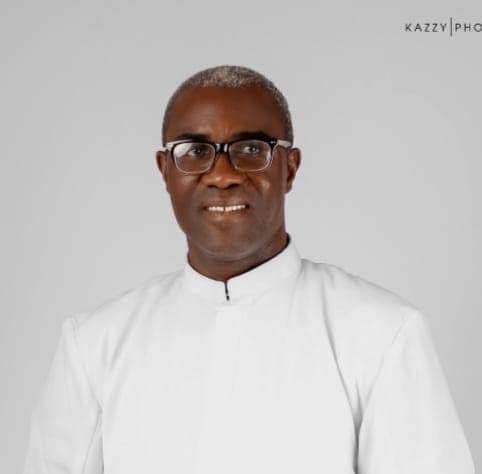
Fr. Richard OMOLADE
The Church is the family of God and God is the God of all people. It thus should stand to good reasoning to expect that everyone is welcome in the presence of God. While Psalms such as Ps 15 and Ps 24 may prescribe some precise criteria for admittance into God’s presence, these criteria are not externally imposed by other people but God Himself, and everyone is both his own accuser and judge. If we do not satisfy the criteria established by God, we have no one to blame but ourselves. What then keeps people away from God other than the sense of their own unworthiness?
The reality many times is that we put hurdles along the path of people such that relationships become complex and difficult. This is true of our relationship with God, while God keeps inviting us into a relationship of love and joy, there are too many hurdles erected by people and systems that makes life difficult for many people. These hurdles are man-made, and detrimental to our quest for joy and peace. We must dismantle these hurdles and make everyone feel welcome in God’s house. It looks simply, but the reality on the ground is that there are many people who do not feel welcome in the Church.
Our Churches are understandably, a mixed group of people. Even those monolithic societies, you are still likely to find some people who do not belong to the main group. We also have our Churches made up of both men and women, children and adults and then young and old. These groups are different and the danger is for majority group to look down on others as outsiders or minorities and make their integration difficult or even consider them as outsiders, even in the Catholic Church, we are not immune to this danger.
The issue of son of the soil that has rocked episcopal appointments in certain dioceses bear witness to this truth. The emergence of Ndigbo as a powerful bloc in Yorubaland is another case that needs careful understanding and handling. On the political realm, the danger is to look on minority groups as of no importance or that they should go back to roots. But having been involved in shaping daily life of commerce and intercultural relationships, we cannot simply discountenance their influence and contribution. We must acknowledge the unique status and see how we can profit by it and make them feel wanted, appreciated and accepted.
Full participation in political life is the only answer. Full participation places obligation on the host community as well as non-indigenes. Their participation cannot be halfhearted, and their commitment must be clearly transparent. If you live among us and share our life and enjoy the good things of life possible in our environment, then you belong and if you belong, then you must make your contributions to making the place better, otherwise you cannot call it home.
Yet the Church is our home, you cannot feel welcome if you keep running away from making your unique contribution but always talking about contributions you make back home or one that is constantly demanded of you. The courageous witness of many Catholics is needed today and regrettably it is often lacking. People want the benefits but are not willing to work and put in the effort. The saying is true and challenging, “Bloom where you are planted.” This is true for everyone in the Church. The Church is our home, it is our family, no one is a stranger. We go to Church to be with our father and in the presence of God, there is fullness of joy. There is fullness of joy only if we are true to ourselves, if we are sincere and come with pure hearts and approach one another with openness and tolerance, seeing God in other Catholics and working together to reach our true home.
The work of God must continue and in urban dioceses made up of people from diverse cultures and tribal leanings, there is need for close collaboration between indigenes and non-indigenes. The motivating factor should always be our love for God and the glory of God. If this is true our devotion and contribution will know no bounds, it will not be limited to a place but take place wherever God sends us or wherever God needs our help. In the final analysis, if here is home, then live as if it is truly your home, but if you still believe home is somewhere else what right have you to expect benefits of belonging? If you treat yourself like a stranger, why would you be considered for any special favour? And if we have made our communities hostile to strangers, it also behooves on us to amend things.
Our Churches must be conducive not only to worship God, but also for loving encounters between people, and in this regard, all of us have a role to play. Let us make the Church a place for all, so that all can feel welcome.


Leave a Comment