

CBCN COMMUNIQUE: OSOGBO 2026
WORKING TOGETHER FOR UPHOLDING HUMAN DIGNITY IN OUR NATION
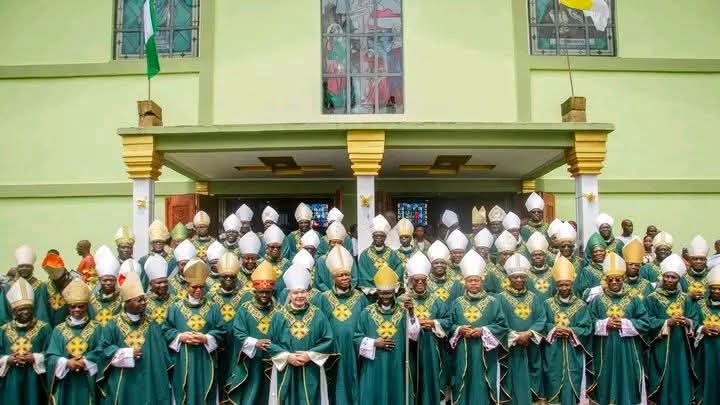
A Communiqué issued at the end of the Second Plenary Meeting of the Catholic Bishops Conference of Nigeria (CBCN) held at Our Lady and St. Kizito Pastoral Centre, Oke-Gada, Ede, Osogbo Diocese, Osun State, 10 - 18 September 2026
1. PREAMBLE
We, the Catholic Bishops of Nigeria, held our Second Plenary Meeting for the year at the Our Lady and St. Kizito Pastoral Centre, Oke-Gada, Ede, Osogbo Diocese, Osun State, from 10 to 18 September 2026. Having prayerfully deliberated on issues affecting the Church and the Nigerian State, we issue this Communiqué:
2. THE DIGNITY OF THE HUMAN PERSON
We commend the Holy Father, Pope Leo XIV, for his recent encyclical Magnifica Humanitas (On safeguarding the Human Person), and we invite all to study this momentous document. Dignity of the human person is an inalienable gift rooted in being created in the image and likeness of God (Genesis 1:27). It is intrinsic, unconditional, and inviolable, grounded not in what a person can do, achieve, or contribute, but in who he or she is (Magnifica Humanitas, 53, 55). For this reason, the recognition of human dignity and the right to life lies at the foundation of Catholic Social Teaching. They are a prerequisite for pursuing all its other principles, including the common good and social justice.
Sexual and other forms of violence are instances of the abuse of the dignity of the human person. The Catholic Church opposes every form of violence and abuse. Sacred Scripture teaches that God created the human person, male and female, equal in dignity and called them to relationships marked by love, fidelity, and mutual respect. We reaffirm that violence and abuse contradict this divine purpose. Every human person possesses an inviolable dignity. Sexual and other forms of abuse violate this dignity and leave deep wounds in those who suffer it (Dignitas Infinita, 1, 43-45). We acknowledge that the credibility of our pastoral witness is strongly impacted by how the Church responds to abuse, defends the weak, and listens to those who suffer. We urge our people in the Church and Society to avoid all forms of abuse and violence, and respect the dignity of the human person, male and female.
3. THE CHURCH AND TECHNOLOGY
Technology is a profoundly human reality, linked to the autonomy and freedom of man. We express and confirm the primacy of the spiritual over the material even in the use of technology. Technology is not inherently evil or antagonistic to humanity, but it is never neutral (Magnifica Humanitas 4, 9, 16). As a vehicle for evangelization, we enjoin all to use it to transform data into knowledge and insights for greater value. We urge all politicians and others to exercise responsibility and ethics in deploying technology and Artificial Intelligence (AI), especially as we approach the forthcoming elections.
4. CONTINUED NEO-PAGANISM IN OUR NATION
We have continued to witness the challenge of neo-paganism in our nation. As we have previously noted, this attitude involves a growing trend where believers and especially youths return to idle worship, due largely to economic hardships, cultural revival, and shallow Christian formation. Since modern neo-paganism spreads rapidly through internet culture, media engagement, and books, we encourage pastoral agents to intentionally incorporate the use of digital spaces, social media, and online catechesis in teaching the truth of the Gospel. We recommend a healthy inculturation which seeks to respect our positive cultural heritage while firmly upholding foundational Christian truths.
5. CHRISTIAN EDUCATION
The provision of quality education is a necessary tool for human development and peaceful integration of diverse people and cultures, and Catholic Education contributes immensely to this. As Mother and Teacher, the Church has always been actively involved in the education of children. She teaches that all persons have inalienable right to an education that is in keeping with their ultimate goal and salvation (Gravissimum Educationis, 1). As Church, we are always ready to collaborate with Government in providing quality education. We, therefore, urge governments to embrace their constitutional responsibility of funding education. This is in line with the constitutional right of children, whether in public or private or mission schools, to receive free education especially in primary and secondary levels. We also demand that Government put policies in place that will enhance the development of the human person and our nation.
6. STATE OF THE NATION
We continue to thank God for the numerous human and natural resources with which he has endowed our nation. We equally appreciate the positive efforts our governments and citizens are making in keeping our nation united despite all odds. We call on everyone to work together in building a nation that promotes integral human development. It is, however, regrettable that insecurity, poverty, poor infrastructure, bad governance, and assault on human dignity have continued to ravage our nation and its citizens.
i. Insecurity
We recognize the move by government to decentralise the police system to tackle insecurity in our nation. At the same time, we request that such a reorganisation should be deployed for the common good rather than for personal, ethnic, political and religious interests. We observe that incidents of widespread violence, kidnapping, banditry, illegal mining and stealing of our common natural resources persist. All these rob citizens of peace and threaten the unity of the nation. In a special way, we demand Government to do all that is necessary to stop banditry and recover the vast portions of land used for this criminal activity and ensure a productive and beneficial use of the land.
We note with concern that the invasion of schools and places of worship and abduction or even killing of students and worshippers still go on. More so, the massive displacement of communities in some parts of our nation has taken a toll on the social, economic and political lives of our people, with millions of people in IDP (Internally Displaced Persons) camps across the country. We enjoin Government to intensify efforts and impactful actions to enable the displaced persons return to their ancestral homes. We equally urge government at all levels to ensure that all people including migrants and refugees are treated with respect and human dignity with their basic rights and needs guaranteed and respected. While we pray for the repose of those who have been killed, we encourage Government to strengthen security forces, deploy better intelligence, and hold wrongdoers accountable. We ask our people to report suspicious activities, cooperate with security agencies, and reject ethnic or religious divisions.
ii. Poverty
We note with grave concern how poverty has been used as a despicable instrument of control in our nation. Hardship and lack of basic needs leave many families struggling to survive despite our national wealth. We demand that government at all levels create more job opportunities, provide enabling environment for growth, support local businesses, and manage economic policies that ease the financial burden on the poor. Concerted efforts, therefore, must be made by the federal and state governments to drastically reduce poverty, pain and suffering of our people. Still more, Government should work to provide enabling policies for private sector participation. At the same time, we encourage our citizens to practise honest labour, support local enterprises, and avoid criminality and corrupt practices.
iii. Poor Infrastructure
Bad roads, erratic power supply, and failing public utilities slow down economic growth and daily life. We charge Government to transparently invest more funds in public amenities, repair vital roads, and ensure steady electricity and clean water. We particularly demand that railway transport facilities be provided throughout the nation to enhance socio-economic life of our people. We also ask our people to protect public property from vandalism and report corrupt practices about infrastructural projects.
7. FOREIGN AIDS (REGULATION, TRANSPARENCY AND DISCLOSURE) BILL 2026
This Bill, which has passed through first and second readings in the National Assembly, will have negative impact in the society. Some provisions require registration of foreign aid resources and mandate authorities to supervise the use of the resources. These sound good but have the potentials to adversely affect churches, mosques, schools, and humanitarian groups that provide critical aid in conflict-affected or vulnerable groups. This Bill, which allows authorities to deny registration or refuse renewals if an organization's work is deemed “not in the national interest”, gives broad, undue discretionary powers to government officials. Again, the Bill risks creating an unnecessary layer of bureaucracy, duplicating existing laws, and granting excessive government control that could stifle independent civic space. Non-profit organizations and Incorporated Trustees including Churches, Mosques, other religious bodies, and humanitarian groups are already strictly regulated by the Corporate Affairs Commission (CAC) under the Companies and Allied Matters Act (CAMA) and some other extant laws. We, therefore, request the National Assembly and the federal government not to proceed with the processes of making this Bill into law in the interest of fundamental rights of association and freedom of religion, thought and conscience, and the overall development of our people and nation.
8. GENERAL ELECTIONS 2027
As we approach the 2027 General Elections, we call on all stakeholders to work for free, fair and credible elections. We encourage eligible voters to come out en masse to vote qualified people into offices and in line with their good consciences. As a Conference, we have issued a pastoral letter regarding the forthcoming general elections. We call on all citizens to study the pastoral letter and follow the provisions and guidelines. We invite all dioceses and parishes in our nation to embark on civic education, mobilization and end-of-month fasting and prayer with Rosary processions from October to December 2026 in preparation for the elections. We announce that 8 December 2026 will be observed as special and national day for prayer and fasting for the success of the elections.
9. EVENTS IN THE CHURCH
As we continue the Special Jubilee marking the Eighth Centenary of the death of St. Francis of Assisi, we urge all people of goodwill to pay particular attention to safeguarding the environment, the praise of which St. Francis of Assisi spoke so eloquently. The celebration of the Mass for the Care of Creation was a good wake-up call for us and we hope that we will build on the success of this celebration. We thank God for the success of our last visit to the Threshold of the Apostles (Ad limina Apostolorum) in Rome (1-16 March 2026), through which we express our communion with the Holy Father. We pray that the visit will bear fruits in our local churches and our nation. We congratulate the Vice President of our Conference, Archbishop Alfred Adewale Martins of Lagos Archdiocese, on his appointment to the Dicastery for Evangelization, Section for First Evangelization and the New Particular Churches. We wish him every success in this appointment.
We commiserate with Abakaliki Diocese on the death of her Local Ordinary, Bishop Peter Nworie Chukwu, on 10 April 2026, and the Archdiocese of Benin-City, whose Archbishop, Most Rev. Augustine Obiora Akubeze, also answered the heavenly call on 9 July 2026. May the good Lord reward their labours and may they rest in perfect peace with the Lord. We congratulate Most Rev. Ernest Obodo and Most Rev. Donatus Ogun on their appointments, by the Holy Father, as Apostolic Administrators of Abakaliki Diocese and Benin-City Archdiocese, respectively. We pray that their ministries bear abundant fruits.
10. CONCLUSION
The dignity of the human person is the very foundation of human rights and religious liberty, rooted in both human reason and the revealed Word of God (Dignitatis Humanae, 1). Nigeria has its challenges of achieving national integration. But all hope is not lost. Every positive change at home, at work, or in our community makes the world a better place. We vigorously repeat our call for a renewed politics that focuses on moral principles, the promotion of human life and dignity, and the pursuit of the common good. We continue to pray especially for all who hold political positions, as recommended by St. Paul (1Tim.2, 3-6).
We offer prayers for all men and women of our country that we may lead a productive and peaceful life, godly and respectful in every way. May our Blessed Virgin Mary, Mother of all Consolation and Hope, and Patroness of Nigeria, continue to intercede for us. Amen


Leave a Comment